02 / Tyres and suspension
Tyres
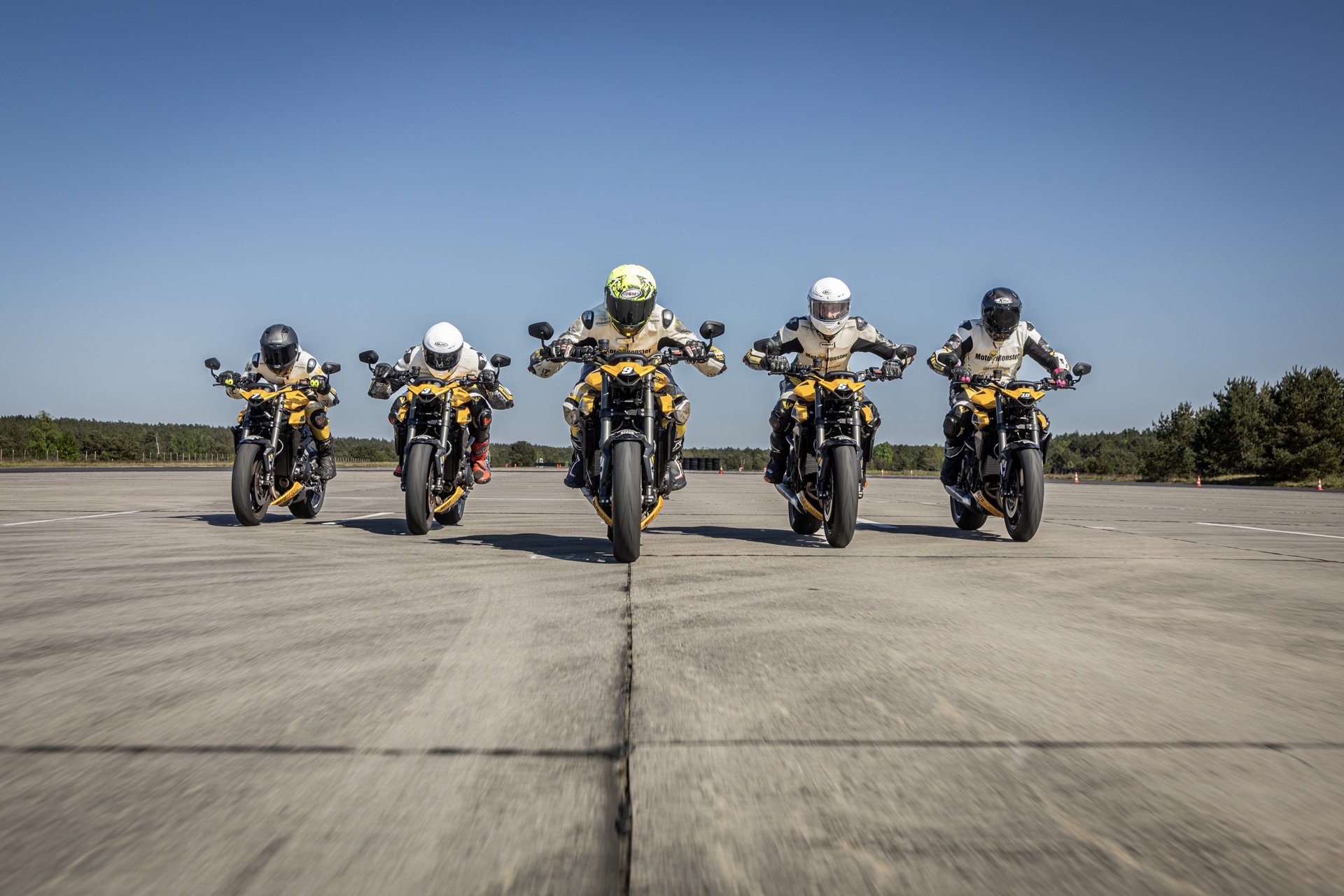
You can ride on track with road tyres, especially if you’re taking your everyday road bike to the circuit for the first time. Modern sports tyres provide enough grip for a track day beginner. Problems can arise when track and air temperatures are very high and you start riding considerably faster as your experience grows. Under these conditions, standard road tyres can lose grip quickly, offering much less traction than slicks or treaded race tyres.
It’s a mistake to think the track is a good place to finish off your old tyres. As tyres wear or the rubber ages, they can offer less grip. Yet grip is exactly what you need on track, where you lean further and accelerate harder than on the road. If your tyres are in good condition and have sufficient tread, there’s no need to change them straight away.
Touring tyres generally offer less grip than sports tyres, making them less suitable unless you plan to ride at a relaxed pace.
Slicks or treaded race tyres become an option once your riding has improved considerably and you start working on your lap times.
Suspension
Some riders start adjusting their suspension before a track day because they’ve heard it needs to be firmer, softer, more responsive or something else entirely.
If you do this, you’ll be getting on a bike that feels unfamiliar. That gives you one more thing to deal with and can distract you from your riding.
It’s much better to arrive with the bike you already know. If you feel something could be improved while riding, simply visit our suspension specialist during the event. Explain what you’re feeling and what you’d like to change — they’ll know which adjustments to make. Together, you can find the setup that works best for you and makes you feel comfortable.
Often, this setup will also make your bike more enjoyable to ride on the road.
Your settings will be documented, so you can restore your original setup afterwards and switch back to your track settings whenever you need them.
04 / Track flags and their meanings
A quick guide to track flags
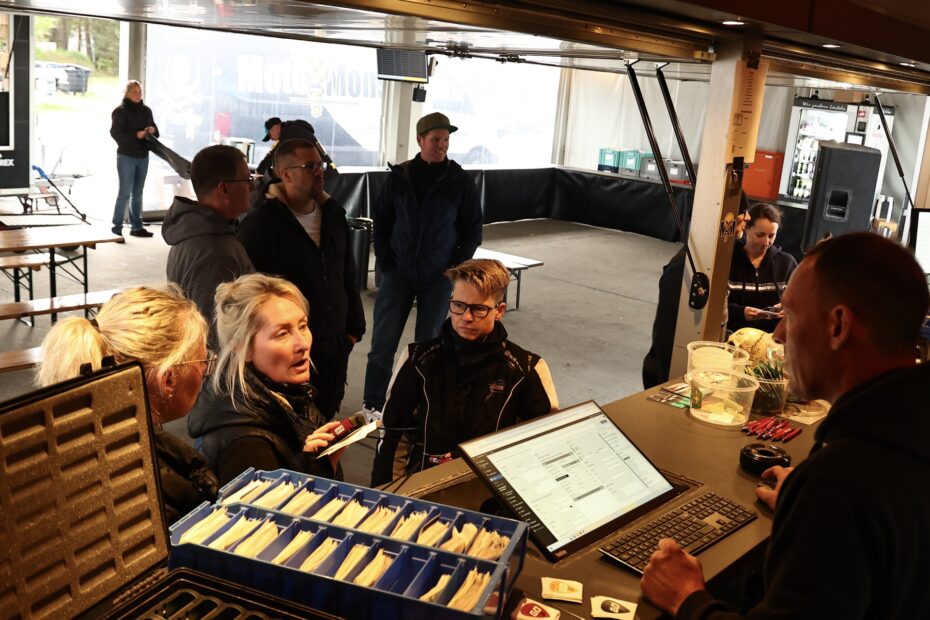
Flags and/or LED panels are used to communicate with riders on track. Make sure you know these signals — they’re essential for your safety and the safety of everyone else on track.
If you ignore them, you may soon find yourself being shown the black flag.
If you ignore them, you may soon find yourself being shown the black flag.
Flaggen 1–2 von 8
Black flag
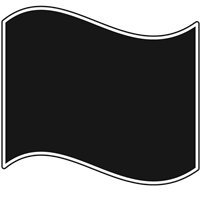
The black flag is shown to an individual rider, usually together with their race number. If it’s shown to you, you must leave the track. Everyone else can continue riding.
Once you’re off the track, report to the staff at pit exit or an event official. This flag is shown if an externally visible technical problem has been spotted on your bike or if you’ve been disqualified from a race.
Once you’re off the track, report to the staff at pit exit or an event official. This flag is shown if an externally visible technical problem has been spotted on your bike or if you’ve been disqualified from a race.
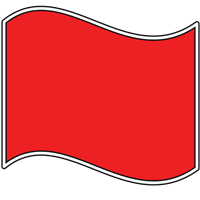
Red flag
The red flag means the session has been stopped and is displayed at all marshal posts. When you see it, ease off the throttle, avoid sudden braking and return promptly to the pits. Do not stop at the scene of the incident!
Overtaking is prohibited while the red flag is displayed!
Overtaking is prohibited while the red flag is displayed!
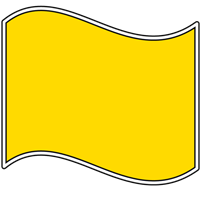
Yellow flag
The yellow flag is shown at and before a hazard, usually a crash. When you see it, slow down safely, stay alert and pass the hazard with care. Avoid sudden braking — the session continues.
Overtaking is prohibited while the yellow flag is displayed!
Overtaking is prohibited while the yellow flag is displayed!
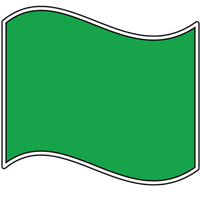
Green flag
The green flag is shown after a hazard, for example, to indicate that the track is clear again. Once you pass it, you can resume normal riding and overtaking is allowed again.
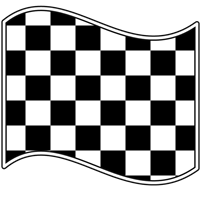
Chequered flag
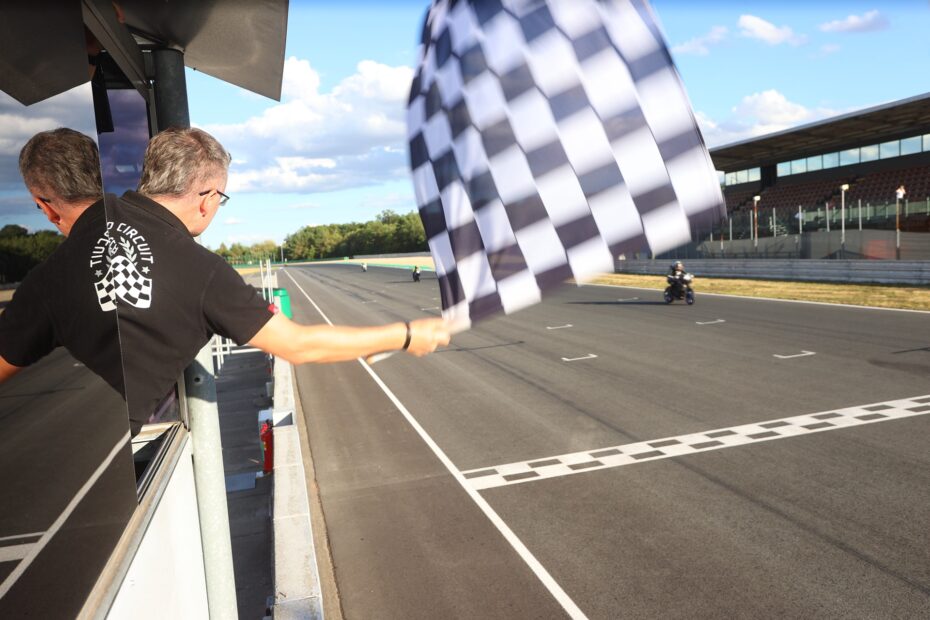
The chequered flag marks the end of the race or session and is waved at the finish line. When you see it, complete one final lap, then return to the pits or paddock.
On this final lap, ease off the pace slightly and avoid overtaking wherever possible. Don’t brake abruptly or slow to a crawl. Keep a reasonable pace throughout your cool-down lap and leave the track promptly afterwards.
On this final lap, ease off the pace slightly and avoid overtaking wherever possible. Don’t brake abruptly or slow to a crawl. Keep a reasonable pace throughout your cool-down lap and leave the track promptly afterwards.
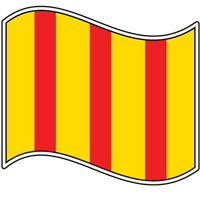
Oil flag
This flag is shown when grip conditions on track have changed, for example due to oil or coolant spilled by another rider.
Adjust your speed accordingly and ride with extra caution.
Adjust your speed accordingly and ride with extra caution.
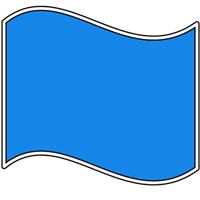
Blue flag
This flag is only used during races, such as the MotoMonster RookieRace. It tells the rider ahead that a rider behind is about to lap them.
If you’re being lapped, don’t try to compete with the faster rider. Let them pass at a suitable point.
If you’re being lapped, don’t try to compete with the faster rider. Let them pass at a suitable point.
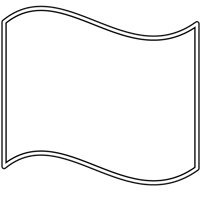
White flag
At track days, the white flag usually indicates a slow-moving vehicle on track, such as an ambulance or a safety vehicle.